How to Play Minecraft Dungeons II
The sequel's combat loop, from dodge rolls to talisman passives.
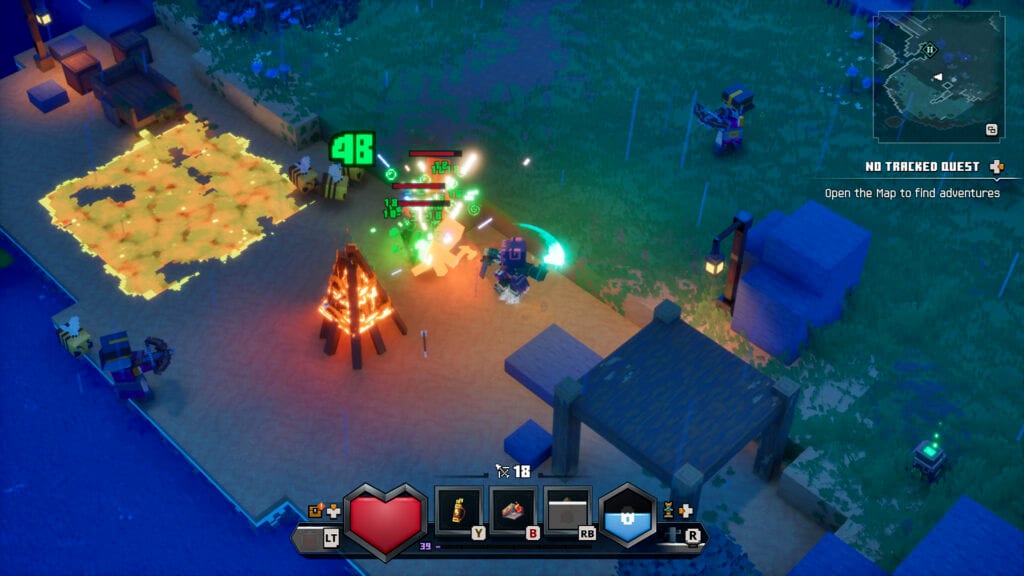
Minecraft Dungeons II still wants you to smash a room, vacuum the loot, and immediately look for a better room. What changed is everything around that loop. You can jump. Armor splits into four pieces. Talismans add quiet passives. The Overworld is a place you travel, not a list you pick from. This page is the mechanical how-to for those changes, written so a first-time ARPG player and a Diablo veteran land on the same habits.
The loadout, piece by piece
Every hero carries:
- One melee weapon (swords, hammers, staffs, dual weapons, sickles, and more)
- One ranged weapon (bows, crossbows, trickbows)
- Four armor pieces
- Three artifacts (active abilities with short cooldowns)
- Three talismans (passives, including pets)
That is twelve combat slots, up from six in the 2020 game. Minecraft.net’s August 31 systems article is the source for the count. Projectile weapons now have unlimited ammunition that recharges on its own — you are not managing arrow stacks. Random extra effects can roll on gear; the Blacksmith can reroll a bad one. The full slot map is on inventory and gear.
There is no class screen. If you want to be a tank, you stack heavy armor and a war hammer. If you want to be a ranger, you stack dodge enchants and a charged bow. The starter builds page turns that idea into three launch templates. The loadout planner is the same idea as a checklist.
Movement and the new jump
The original game was mostly grounded. The sequel adds a jump that matters in both the Overworld and The Sift. Use it to clear short gaps, reach a ledge, or close on flying enemies. Do not treat it as a second dodge. Dodge roll still exists, and several enchantments shown in the August gameplay trailer modify that roll — including extra roll frequency and a roll that fires arrows. If you find those books, take them to the Enchantsmith instead of slotting a random fire prefix.
Camera language in the official footage is still isometric. You are reading telegraphing on the floor (copper lightning traces, sculk pulses, ravager charges) more than you are flicking a first-person reticle. That is why controls matter: the dodge and jump binds have to sit under fingers you trust.
A fight, second by second
- Open with ranged. Soften the pack before it surrounds you. Crossbows are for volume; charged bows are for priority targets.
- Step in with melee. Finish stragglers. Wide weapons such as the Tornado Blade, which official coverage described as dealing extra damage to secondary targets, exist for this step.
- Spend artifacts on cooldown. Bombs, buffs, and shockwaves are part of your damage, not emergency buttons. Hands-on reports keep repeating that cooldowns are brief on purpose.
- Dodge the named tell. Lightning crawling under your feet, a copper dash, a Warden-style boom — those are the moments you roll or jump, not the moments you greed a last light attack.
- Loot without freezing the party. In couch co-op, hold the inventory bind for the on-screen mini menu so three other people can keep fighting. Details are in co-op.
Watch the trailer in the middle of this article for the cadence. It is closer to a brawler than a loot-and-hide ARPG. Xbox Wire’s gamescom piece said the sequel feels built around aggression. Play like that and the systems click. Play like a cover shooter and bosses will look overtuned.
Reading your own build
The new Effects and Enchantments menu flattens every bonus from weapons, armor, and talismans into one list. Open it when a drop looks strong but the run still feels slow. You are looking for overlapping verbs: more dodge, more arrows, more fire, more regen puddles, more pet uptime. The Showcase demo chained weapon enchants that spawned regen spots on kills with a dog talisman that needed those spots. That is the skill the sequel is teaching — not a 40-point skill tree, just stacking verbs.
Power level still matters. If an item is pretty but under-levelled, the Blacksmith can push it to your current cap. If the item is the right level with the wrong buff, reroll that buff instead of binning a look you like. That loop is why this how-to page keeps sending you back to town; the sequel wants you to edit gear, not only replace it.
Enemies and when to change tactics
Overworld packs are still Minecraft-flavoured: zombies, skeletons, spiders, slimes, illagers, royal guards, ravagers. Soul Corrupted variants matter because they drop the Enchantsmith’s currency. Sift creatures are stranger — blob-like grazers that turn hostile, jellyfish-like sprouts that beam buffs into allies, copper cubes beside the Copper Monstrosity. If a pack suddenly feels immortal, look for the support mob first and kill the beam, not the tank.
Bosses are where the how-to becomes a how-to-beat. The Copper Monstrosity is a punch-and-lightning arena fight. The Twisted Warden is a Deep Dark spectacle with sonic-style pressure. Neither wants you to hide. Both want every artifact on the bar.
How to play with friends without throwing the run
Share roles without locking classes. One player can hold a pet and regen. One can hold a war hammer for stun windows. One can hold a battlestaff or bow for backline. Revive quickly; the game is tuned as a hangout ARPG, not a raid wipe simulator. If someone is new, point them at Getting Started and let them keep a messy loadout for the first dungeon. The sequel is designed so a kid and a genre veteran can share a screen. That only works if the veteran does not vendor the kid’s favourite sword.
When you are comfortable with the loop, push into The Sift for the new dimension’s movement checks, and use the weapons and armor lists to stop guessing at loot. The how-to is the grammar. Those pages are the vocabulary.
Frequently Asked Questions
Quick answers to the most common questions.
Is there a class system in Minecraft Dungeons II?
No. You mix melee, ranged, four armor pieces, three artifacts, and three talismans. See starter builds for templates.
What is new compared with Minecraft Dungeons 1?
Jumping, a connected Overworld, four armor slots, talismans, the Enchantsmith, and a faster combat cadence. The updates hub lists where each system was shown.
Should I spam artifacts or save them for bosses?
Spend them. Hands-on coverage says cooldowns are short and the sequel rewards constant ability use, including during pack-clearing.
How do enchantments work now?
You find Enchant Books in the world, then spend Soul Corrupted currency at the Enchantsmith. The Blacksmith and Enchantsmith guide walks through both vendors.